Former ballpark · 1894 – 1914
South End Grounds III
Boston, MA
- Opened
- 1894
- Closed
- 1914
- League
- NL
The lore
The Park Built in Ten Weeks
A Boston ballpark shaped by a fire, diminished by insufficient insurance, and abandoned mid-season during a pennant race.
Ten Weeks
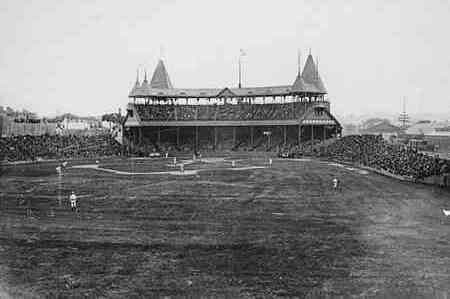
The South End Grounds burned on May 15, 1894, during a game against Baltimore. The fire spread from the ballpark to the surrounding tenement homes and kept going — more than a hundred buildings destroyed, 1,900 people left homeless. 10 weeks later, on July 20, a new ballpark reopened on the same site.
It was smaller than the one it replaced. The previous structure had not been sufficiently insured, and there was not enough money to rebuild to the original plans. What went up was a diminished version of what had stood before, assembled fast enough to reopen before the summer was out.
The rebuilding rearranged the streets around the site. Berlin Street disappeared entirely. Columbus Avenue was constructed running just outside the right field area. The park stood on the northeast corner of Columbus Avenue and Walpole Street — now Saint Cyprian's Place, just southwest of Carter Playground. Boston's National League club called it home from 1894 to 1914. The sign over the entrance gate read Boston National League Base Ball Park, though the place went on being called the South End Grounds.
Two Pitchers
On September 12, 1911, 44-year-old Cy Young pitched the final home game of his career in a Boston uniform at the grounds, facing the New York Giants and fellow future Hall of Famer Christy Mathewson. The matchup of two legendary pitchers in the aging park marked the end of an era for Boston baseball.
What Was Left Behind
In the fall of 1913, owner James Gaffney acquired a parcel at Columbus Avenue and Walpole Street and began ambitious plans to demolish the existing grandstand, enlarge the playing field, and erect a new modern concrete grandstand. He installed a new scoreboard in deep center field at the start of the 1914 season as part of the ongoing improvements. The Braves moved out after their game on August 11, 1914, to accommodate larger crowds at Fenway Park during the pennant race stretch drive.
Reporting: New England Historical Society, RetroSeasons, SABR, Wikipedia. Park data: MLB StatsAPI and Retrosheet, via the Fever engine.
By the Desk · filed 2026-07-24 — the piece reads as of its filing; the park record around it is live · every fact in this piece comes from a filed, sourced research pack and clears an independent fact-check, and nothing is edited after filing.
Where it stood
Boston, MA. We don’t have exact coordinates for this park in the historical record — we’d rather say so than pin the wrong spot.
Sources
- Retrosheet · as of 2026-07-23
The information used here was obtained free of charge from and is copyrighted by Retrosheet. Interested parties may contact Retrosheet at 20 Sunset Rd., Newark, DE 19711.